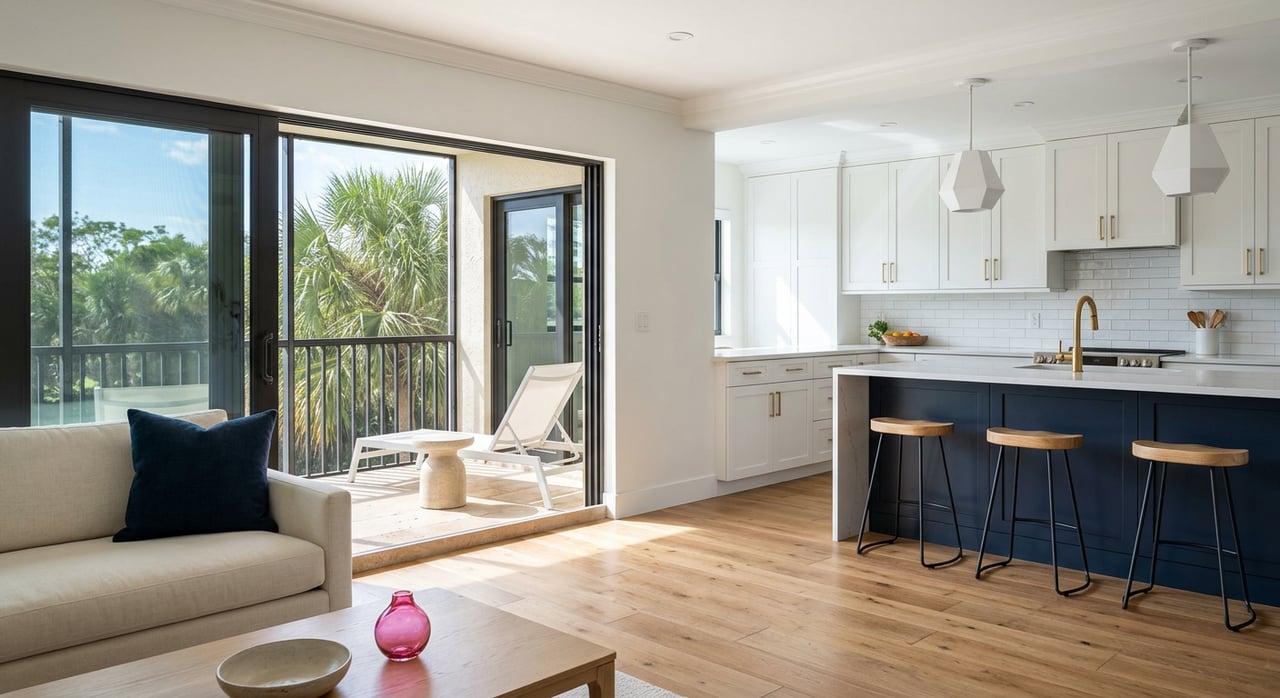
Melbourne FL Condo vs House: A Clear, Local Comparison
March 24, 2026
March 24, 2026
Trying to choose between a condo or a house in Melbourne can feel like comparing oranges to mangos. Both can work well on the Space Coast, but the monthly math, maintenance, and risk look different. If you want a clear, local read on costs, rules, and how to decide, you are in the right place. In this guide, you will learn how Melbourne prices stack up, how HOA dues compare to home maintenance, what to know about taxes, flood and insurance, and the condo rules that affect financing. Let’s dive in.
Median sale prices in Brevard County set a helpful baseline for Melbourne buyers. As of January 2026, county medians were: all property types $353,500, single-family homes $369,900, and townhouses/condos $295,000. These are MLS-derived figures and a reliable local benchmark for planning your budget. You can review the Florida REALTORS county medians in the latest release for the Palm Bay–Melbourne–Titusville area.
According to recent Florida REALTORS data, the county’s townhouse/condo median sits below the single-family median, which often makes condos a more accessible entry point for first-time buyers. Different data vendors can show different numbers for the same month, so use county medians for a conservative baseline and then refine by neighborhood and building. See the January 2026 county medians.
Your best comparison is an “all-in” monthly number that includes mortgage, taxes, insurance, flood (if needed), HOA dues, and a maintenance reserve. Here is how the big pieces usually differ.
Tip: For any condo, ask for the budget, reserve study, meeting minutes, insurance details, and any current or pending special assessments. For houses, focus on roof age, HVAC, termites, drainage, and near-term replacement costs.
Property taxes vary by city, special districts, and your assessed value, so two similar homes can generate very different tax bills. In much of Brevard, combined millage often falls in a range that roughly translates to the low-to-high teens per $1,000 of taxable value. For a precise estimate, use the Brevard County Property Appraiser’s millage schedules and run an address check before you finalize an offer. Review Brevard millage schedules and tools.
Coastal proximity and elevation matter in Melbourne. If a property sits in a higher-risk flood zone, your lender will likely require flood insurance and the premium can be substantial. Start by checking the county’s flood zone resources and consider requesting an elevation certificate for properties near the Indian River Lagoon or low-lying areas. Use Brevard’s flood zone information page.
Florida’s homeowners insurance market has also been shifting, with rate filings and carrier changes that affect Brevard. Budget time to get quotes early, since a condo’s HO-6 policy plus the building’s master policy will price differently than a single-family HO-3 policy. See recent statewide context from Citizens Property Insurance.
Condo purchases come with building governance, inspection rules, and lender reviews that you will want to understand up front.
Florida’s post-Surfside reforms require many condo buildings to complete milestone structural inspections and a Structural Integrity Reserve Study. Associations that find capital needs may raise dues or levy special assessments to fund repairs. Before you remove contingencies, request the latest milestone report, the SIRS, the budget and reserves, and recent board meeting minutes. If reports are missing or reserves are thin, proceed with caution. Check the state’s condo inspection guidance.
Most condo loans require a project review that looks at owner-occupancy, reserves, insurance, litigation, and overall building health. Standards vary for conventional, FHA, and VA financing. If you plan to use a low-down-payment product or government loan, confirm that the project meets eligibility before you fall in love with a unit. Start this conversation with your lender early to avoid surprises. Review Fannie Mae’s condo project standards.
If rental potential matters to you, there are two layers to check. First, local rules across Brevard municipalities differ for short-term rentals. Second, HOA covenants may restrict rentals by frequency or minimum lease length. Confirm both the municipal requirements and the HOA’s rental policies before you buy. Read the state’s overview of vacation rental regulation.
Single-family homes typically draw a broad buyer pool, which can support resale in many market cycles. Condos can resell very well too, but buildings with high dues, pending structural work, limited reserves, or litigation can face slower sales and tighter financing. When you compare options, look beyond list price to the building’s financial health and the likely buyer pool for that product type in its micro-neighborhood. County-level medians are a good starting point, then refine with local comps and the building’s documents.
Use this quick checklist for each property you consider:
A condo or small townhouse can be a strong fit if you value lower upkeep and a shorter commute to employers around Melbourne, Viera, or the Space Coast tech corridor. The county townhouse/condo median near $295,000 often puts many units within range, but dues can change the monthly total quickly. Focus on well-managed associations with clear reserves and current inspections.
Look for a condo community with stable dues, healthy reserves, clear SIRS and milestone compliance, and a strong master insurance program. Ask about recent assessments and any upcoming capital projects. If you are near the coast or river, add flood risk and insurance quotes to your comparison.
A single-family home can provide more bedrooms, storage, and outdoor area. County medians show single-family homes trending higher than condos, so plan a larger budget window and include your maintenance reserve. If school attendance zones are important, verify boundaries directly with the district and weigh commute times to major employers.
Build your all-in monthly number. Include mortgage, taxes, HOA dues, a 1 to 3 percent maintenance reserve, and quotes for homeowners and flood insurance. Use Brevard’s millage resources to estimate taxes and start insurance quotes early.
If a condo is on your list, request the resale or estoppel packet as soon as you go under contract. Review financials, reserves, meeting minutes, SIRS or milestone reports, master insurance, and any assessments. Have your lender confirm project eligibility up front. See Florida’s condo inspection guidance.
Check flood exposure and elevation. Use county flood resources and consider an elevation certificate for low-lying properties. Get a flood insurance quote before you waive contingencies. Start with Brevard’s flood zone page.
Confirm rental rules. If you want long-term or vacation rental options later, verify city or town requirements and your HOA’s lease limits. Review the state overview of vacation rental regulation.
Ready to compare live options, run the numbers, and pressure test the documents with a local team that blends finance and construction savvy with warm, boutique service? Connect with The Flamm Team for a calm, step-by-step path to the right Melbourne home.
Stay up to date on the latest real estate trends.

Get assistance in determining current property value, crafting a competitive offer, writing and negotiating a contract, and much more. Contact us today.